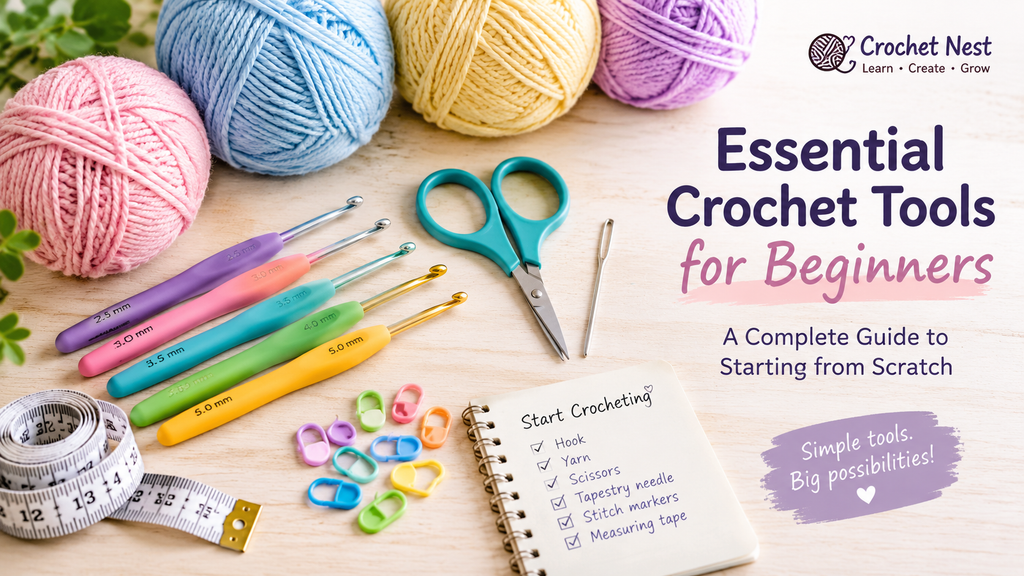
Have you ever wanted to learn crochet but felt confused about which tools to buy? You are not alone. Many beginners think they need a lot of expensive supplies to get started, but the truth is much simpler. With a few basic crochet tools, you can begin making beautiful handmade projects from home.
Crochet is a relaxing and creative hobby that allows you to make scarves, blankets, hats, bags, flowers, and many other items. It is also a useful skill for people who want to create handmade gifts or explore selling their crafts online.
In this beginner-friendly guide, you will discover the essential crochet tools you need, how to choose the right supplies, and how to avoid spending money on items you do not need yet.
What Is Crochet?
Crochet is a craft that uses a hook to pull yarn through loops and create different patterns. Unlike knitting, which typically uses two needles, crochet usually requires just one hook.
Beginners can learn a few basic stitches and gradually use them to create simple projects. You do not need previous crafting experience to start learning crochet.
The best approach is to begin with a small collection of supplies, practice regularly, and add more tools as your skills improve.
1. Crochet Hooks: Your Most Important Tool
A crochet hook is the first tool you should buy. It helps you pull yarn through loops to create stitches.
Crochet hooks come in different sizes and materials, including aluminum, plastic, bamboo, and ergonomic designs.
How to Choose Your First Crochet Hook
For most beginners, a medium-sized hook is a good starting point. A 5 mm (H-8) crochet hook is commonly used with medium-weight yarn, but you should always check the yarn label for its recommended hook size.
Here are some common crochet hook materials:
- Aluminum hooks: Smooth, lightweight, and easy to find.
- Plastic hooks: Often affordable and available in many sizes.
- Bamboo hooks: Lightweight and provide a slightly different grip.
- Ergonomic hooks: Designed with larger handles for added comfort.
You do not need a complete crochet hook set when you are just starting. One suitable hook is enough for your first practice project.
2. Yarn: Choose Beginner-Friendly Materials
Yarn is the material you use to create crochet projects. It comes in different colors, thicknesses, textures, and fiber types.
Choosing the right yarn can make learning crochet much easier.
What Yarn Should Beginners Buy?
A smooth, light-colored, medium-weight yarn is an excellent choice for beginners. It allows you to see your stitches clearly and makes it easier to find mistakes.
Consider these options:
- Acrylic yarn: Affordable, widely available, and suitable for many practice projects.
- Cotton yarn: Useful for dishcloths, small bags, and other practical items.
- Wool yarn: Warm and comfortable, although some types may require special care.
Avoid very dark, fuzzy, or fluffy yarn for your first project. These yarns can make it difficult to see individual stitches.
You can start with one skein of yarn in a light color. There is no need to purchase several colors until you know what you enjoy making.
3. Scissors: For Cutting Yarn Neatly
A small pair of sharp scissors is another essential crochet tool. You will use scissors to cut yarn when finishing a project, changing colors, or preparing a new piece.
Regular household scissors can work well if they cut yarn cleanly. You do not need special craft scissors immediately.
Keep your scissors in your crochet bag so they are easy to find whenever you need them.
4. Tapestry Needle: Finish Your Projects Properly
A tapestry needle, also called a yarn needle, helps you hide loose yarn ends after completing a crochet project.
These needles usually have a large eye that makes threading thicker yarn easier. Some have blunt tips, which are suitable for weaving yarn through crochet stitches.
A tapestry needle is useful for:
- Hiding loose yarn ends.
- Joining crochet pieces together.
- Finishing hats, scarves, and bags.
- Sewing small decorative details onto handmade items.
Plastic and metal yarn needles are both available. Choose one with an eye large enough for your yarn.
5. Stitch Markers: Keep Track of Your Stitches
Stitch markers are small tools that help you identify important points in your crochet work.
They are especially helpful when crocheting in rounds, making amigurumi, or working on patterns that require repeated stitch counts.
You can use stitch markers to:
- Mark the beginning of a round.
- Identify where a row starts or ends.
- Keep track of increases and decreases.
- Avoid losing your place in a pattern.
If you do not have stitch markers yet, a small removable safety-pin-style marker can sometimes work as an alternative. Make sure it does not damage or snag your yarn.
6. Measuring Tape: Check Your Project Size
A flexible measuring tape helps you measure your crochet projects as you work.
This is particularly useful when making clothing, blankets, bags, or other items that need specific dimensions.
For example, you can measure a scarf to check its length or measure a crochet square to make sure several pieces are the same size.
A basic sewing measuring tape is usually sufficient. You do not need an expensive measuring tool for beginner projects.
7. A Row Counter or Notebook
Keeping track of your rows can prevent mistakes, especially when following a written pattern.
A row counter is a small device that records how many rows you have completed. You can also use a notebook, a simple tally chart, or a notes app on your phone.
Write down important information such as:
- The number of rows completed.
- The crochet hook size you used.
- The yarn type and color.
- Any changes you made to the pattern.
These notes can help you repeat a project later and make matching pieces more easily.
8. A Yarn Storage Bag or Basket
You do not need professional storage equipment to organize your crochet supplies.
A small bag, box, or basket can keep your yarn, hook, scissors, needles, and stitch markers together.
Good storage helps prevent yarn from becoming tangled and makes it easier to continue your project whenever you have free time.
If you have pets or young children at home, keep small tools and loose yarn safely stored when you are not using them.
9. Crochet Patterns and Beginner Tutorials
Crochet patterns provide instructions for making specific items. They may include written directions, abbreviations, stitch counts, and diagrams.
Beginners should start with simple patterns that explain the stitches clearly.
Good first projects include:
- A basic crochet square.
- A simple dishcloth.
- A beginner scarf.
- A small coaster.
- A simple headband.
Look for tutorials that explain how to hold the hook, make a slip knot, create a chain, and work basic stitches.
Free tutorials can help you learn before spending money on books or paid courses.
10. Optional Crochet Tools You Can Buy Later
Once you have learned the basics, you may want to add a few extra supplies to your collection.
However, these items are not essential for your first crochet project.
Blocking tools: Pins and a suitable blocking surface can help shape certain finished projects.
Row counters: Useful for patterns with many rows or repeated sections.
Ergonomic hooks: Worth considering if your hands become uncomfortable during longer sessions.
Yarn bowls: Help keep a ball of yarn from rolling around while you work.
Hook size sets: Useful when you begin working with different yarn weights and patterns.
Start with the basics and purchase additional tools only when a project requires them.
How Much Does It Cost to Start Crocheting?
The cost of starting crochet depends on the supplies you choose and the prices in your local shops.
You can keep your initial spending low by purchasing only the tools required for one simple project.
Here is a practical shopping checklist:
| Item | Priority | Why You Need It |
|---|---|---|
| Crochet hook | Essential | Creates crochet stitches |
| Beginner-friendly yarn | Essential | Main material for your project |
| Scissors | Essential | Cuts yarn |
| Tapestry needle | Essential | Hides loose ends |
| Stitch markers | Helpful | Marks important stitches |
| Measuring tape | Helpful | Checks project dimensions |
| Storage bag | Optional | Keeps supplies organized |
| Row counter | Optional | Tracks completed rows |
You may already own some of these items, such as scissors or a measuring tape. Check what you have at home before buying anything new.
For your first project, focus on the crochet hook and yarn recommended by the pattern. Add the remaining basic supplies as needed.
How to Choose the Right Crochet Supplies
Before buying crochet tools, consider these simple tips.
Check the Yarn Label
Yarn labels often provide information about fiber content, yarn weight, recommended hook size, and washing instructions.
Following these recommendations can help you choose supplies that work well together.
Start With One Simple Project
Choose a project that uses basic stitches and requires only a small amount of yarn. This helps you learn without buying materials for a large or complicated project.
Choose Tools That Feel Comfortable
Your crochet hook should feel comfortable in your hand. If possible, try holding different hook styles before purchasing a more expensive set.
Avoid Buying Too Much Yarn
It can be tempting to buy many colors at once, but you may not need them. Start with the amount required for your first project, allowing a little extra if necessary.
Learn Basic Stitches First
Understanding the chain stitch, slip stitch, single crochet, and other common stitches will help you follow beginner patterns more confidently.
Your First Crochet Project: A Simple Plan
Once you have your supplies, follow these steps to begin.
Step 1: Prepare your tools. Place your crochet hook, yarn, scissors, and tapestry needle in one convenient location.
Step 2: Learn to hold your hook and yarn. Try different hand positions until you find one that feels natural and comfortable.
Step 3: Make a slip knot. This creates the first loop on your crochet hook.
Step 4: Practice chain stitches. Make a short chain and focus on keeping your loops reasonably consistent.
Step 5: Practice a basic stitch. Follow a beginner tutorial to learn how to work stitches into your chain.
Step 6: Make a small square or coaster. A small project allows you to practice without using much yarn.
Step 7: Finish your work. Cut the yarn and use your tapestry needle to weave in the loose ends.
Remember that your first project may not look perfect. Uneven stitches and small mistakes are normal when learning a new skill. With practice, your technique will improve.
Common Mistakes Beginners Should Avoid
Buying too many tools is one of the most common mistakes new crocheters make. A large collection of supplies cannot replace practice and patience.
Here are a few other mistakes to avoid:
- Choosing dark or fuzzy yarn that makes stitches difficult to see.
- Using a hook size that does not suit your yarn or pattern.
- Pulling every stitch too tightly.
- Starting with a complicated project.
- Ignoring the pattern’s stitch count.
- Forgetting to check measurements when making wearable items.
Take your time and focus on learning one skill at a time. You can explore more advanced patterns after becoming comfortable with the basics.
Frequently Asked Questions
What are the essential crochet tools for beginners?
The main supplies are a crochet hook, suitable yarn, scissors, and a tapestry needle. Stitch markers and a measuring tape are also useful, but you can begin without buying every optional tool.
What size crochet hook is best for beginners?
A 5 mm hook is a common starting point when using medium-weight yarn. However, the best size depends on the yarn label and the pattern you want to follow.
Can I learn crochet without buying an expensive kit?
Yes. You can learn crochet with a basic hook, a small amount of suitable yarn, and a free beginner tutorial. You can purchase additional tools as your skills develop.
Is crochet difficult to learn?
Crochet may feel unfamiliar at first, but many beginners can learn basic stitches with regular practice. Start with short sessions and simple projects instead of trying to learn everything at once.
What is the easiest crochet project for a beginner?
A simple square, coaster, or dishcloth is a good starting point. These projects help you practice basic stitches without requiring complicated shaping.
Can crochet become a small business?
Yes, crochet can become a small business for people who enjoy making handmade products. Possible options include selling finished items, creating patterns, or offering handmade gifts. However, earning money is not guaranteed and depends on product quality, demand, pricing, and marketing.
Final Thoughts
Starting crochet does not have to be expensive or complicated. With a suitable crochet hook, beginner-friendly yarn, scissors, and a tapestry needle, you can begin learning this creative skill.
Focus on practicing basic stitches and completing one small project before investing in additional supplies. As your confidence grows, you can explore new yarn types, patterns, and techniques.
The most important thing is to enjoy the learning process. Choose your first project, gather your basic tools, and take your first step into the world of crochet.
Welcome to Crochet Nest — your starting point for simple crochet tips, beginner-friendly projects, and creative inspiration.